

Seven practical steps for forgiving with God’s help and keeping the boundaries you need.
I put a photograph on a chair in front of me. The person in it had hurt me, and it wasn’t safe for me to see them.
I wrote down what had happened and what I wanted to say. Then I said it out loud to the photograph.
When I finished, I felt so free.
As an attorney defending Christians in Communist Romania, I faced persecution and house arrest. It took God’s help for me to forgive the people who persecuted me.
You can forgive someone without ever seeing them again. You can tell the truth about what happened and keep whatever distance you need.

Seven steps to forgive
1. Tell the truth out loud
Write down what happened and how it hurt you. You might say, “When you told others what I shared in confidence, I felt betrayed.” Read what you wrote aloud, either on your own or to someone you trust.
2. Separate forgiveness from access
Ask the Lord what contact, if any, is wise. You might decide to have no contact. If you still have to work together, you might speak only about work. Forgiving someone doesn’t mean you have to trust them again.
3. Release revenge
When Peter asked Jesus if seven times was enough, Jesus made clear that forgiveness isn’t a matter of keeping score (Matthew 18:21–22). If you find yourself wishing the person who hurt you would suffer, bring that wish to God. Ask Him to deal with what happened and to give you peace. You can seek justice without seeking revenge.
4. Choose your reason
You may feel pressure to say you forgive so that everyone can move on. In prayer, name your own reason for wanting to forgive. I forgave because God forgave me. If you want to obey Him but still feel angry, tell Him both.
5. Grieve what you lost
Name what you lost. It might be a friendship, the feeling of safety in your own home, or years you cannot get back. If it helps, tell someone you trust what you miss. God is not against grief. You can choose to forgive while you are still grieving.
6. Watch how you tell the story to yourself
When you remember what happened, listen to what you are telling yourself. Someone may have betrayed you, but that does not make you unworthy of love. Your value comes from Christ. Open the Psalms and read aloud a passage that reminds you how God sees you.
7. Choose the timing and the form
You can forgive privately, between you and God. If you ever choose to talk with the person who hurt you, do it only if it is safe. Forgiveness may come in stages. Here are some words you can use along the way:
- “I want to forgive, but I am not ready.”
- “I won’t try to pay them back.”
- “God, help me when the memory comes back.”
- “I can pray for them to turn away from what they did.”
Remembering what happened does not mean you’ve failed to forgive.
When forgiveness has been used against you
If you were told to forgive to cover up abuse, I understand why the word can feel like a trap. When the harm is ongoing, your safety comes first. You can tell someone what happened and ask for help, whether or not you’re ready to forgive.
Forgiveness is a choice you can make on your own. Reconciliation takes both people. It requires safety and a willingness to face what happened. Sometimes a relationship cannot be rebuilt.
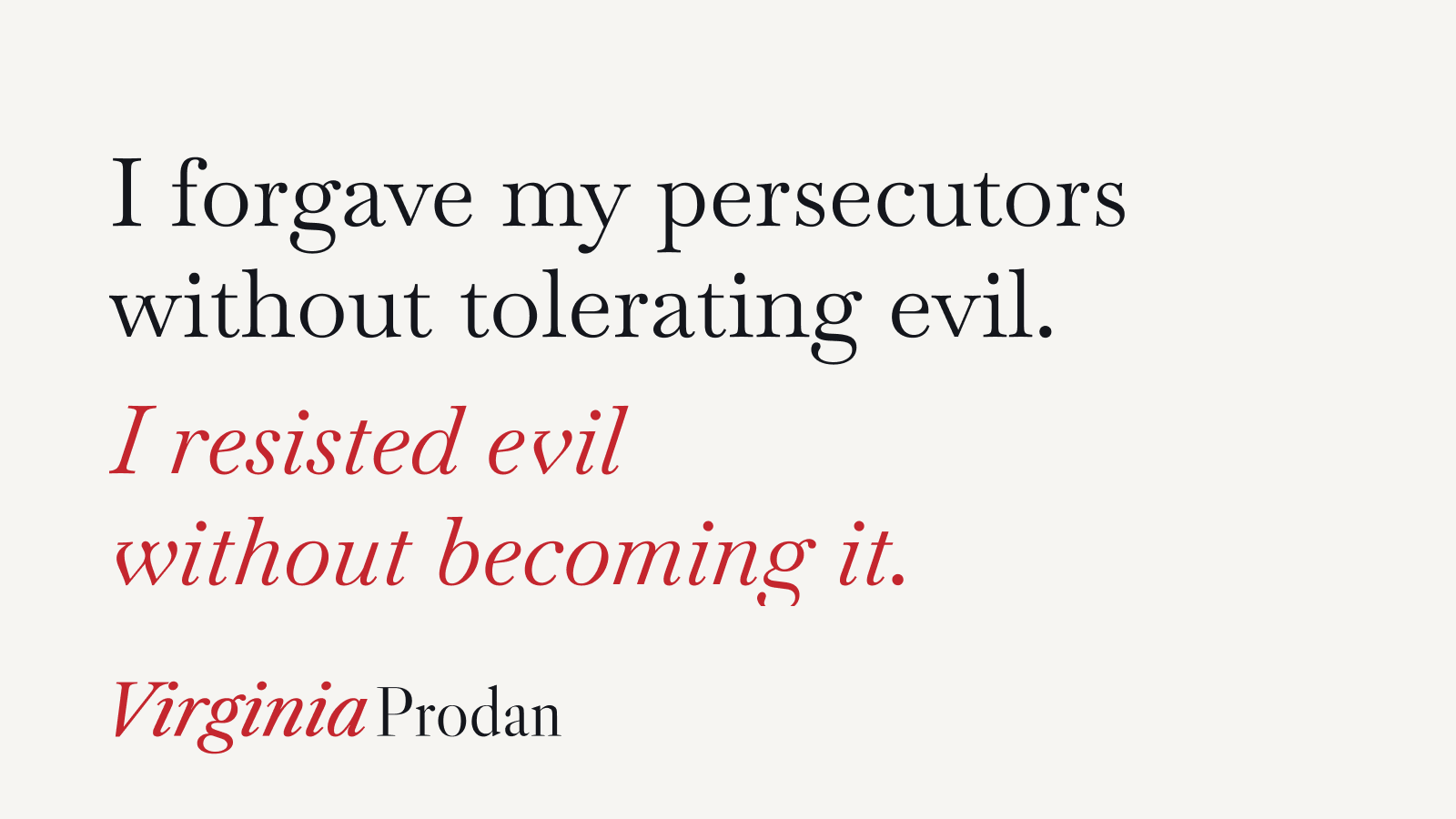
I forgave my persecutors without tolerating evil. I resisted evil without becoming it.
Forgiveness does not depend on an apology
I shared the gospel with the man who came to kill me in Romania, and he came to Christ. Years later, he told me he had become a pastor. He gives his own account in the afterword to my memoir, Saving My Assassin.
I thank God for what happened in his life. The person who hurt you may never admit what they did. You can forgive without waiting for them to change.
Where to begin
You may not be ready to say, “I forgive.” Begin with one honest prayer: “Lord, I am willing to be willing to forgive.” You don’t have to say those words to anyone else.
You can hear me teach these seven steps on my podcast, Courageous Leadership with Virginia Prodan: How to Forgive and Be Free.
If you’re planning a church retreat, a conference or a leadership program, I would welcome a conversation with you. Invite Virginia to speak.
